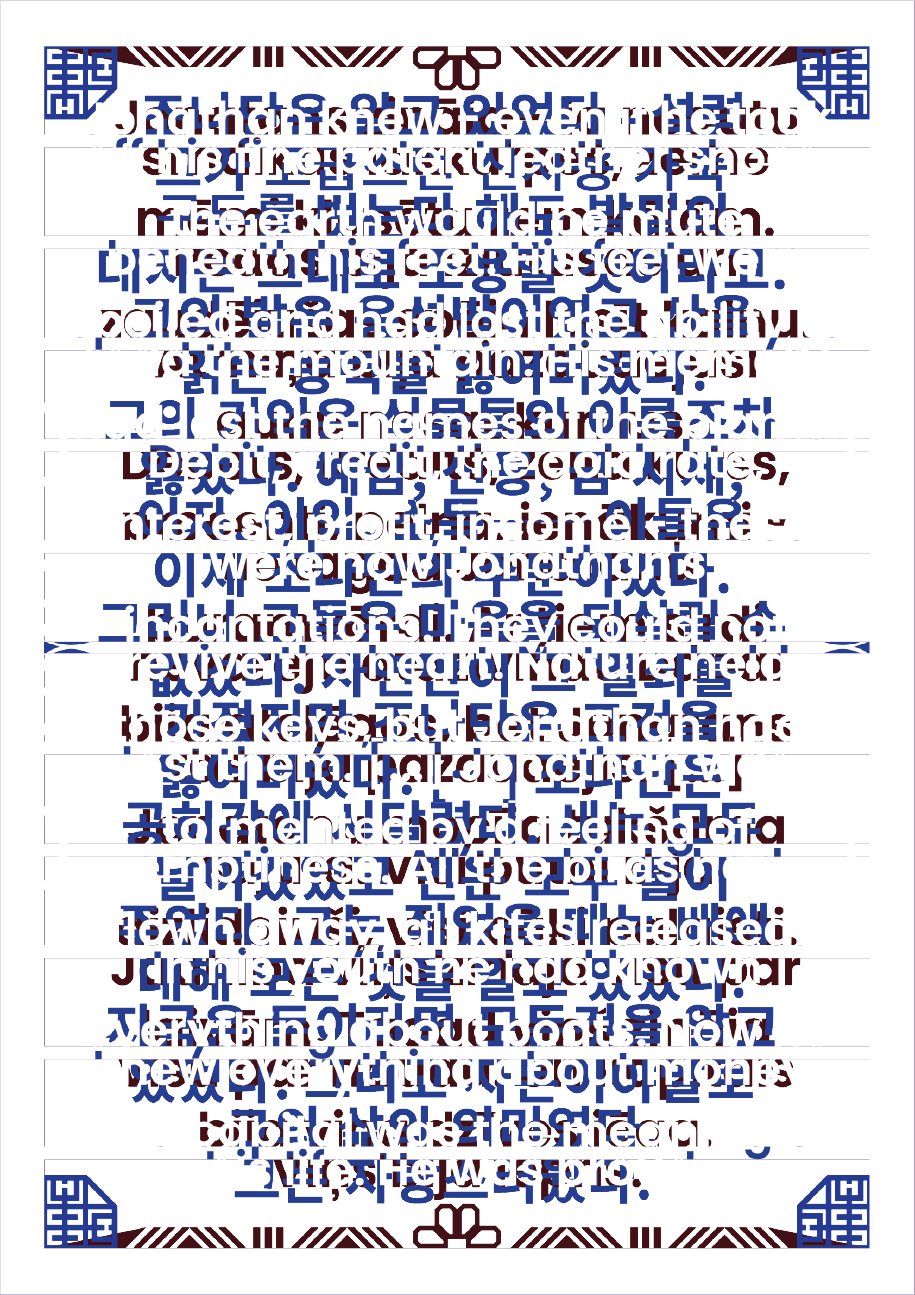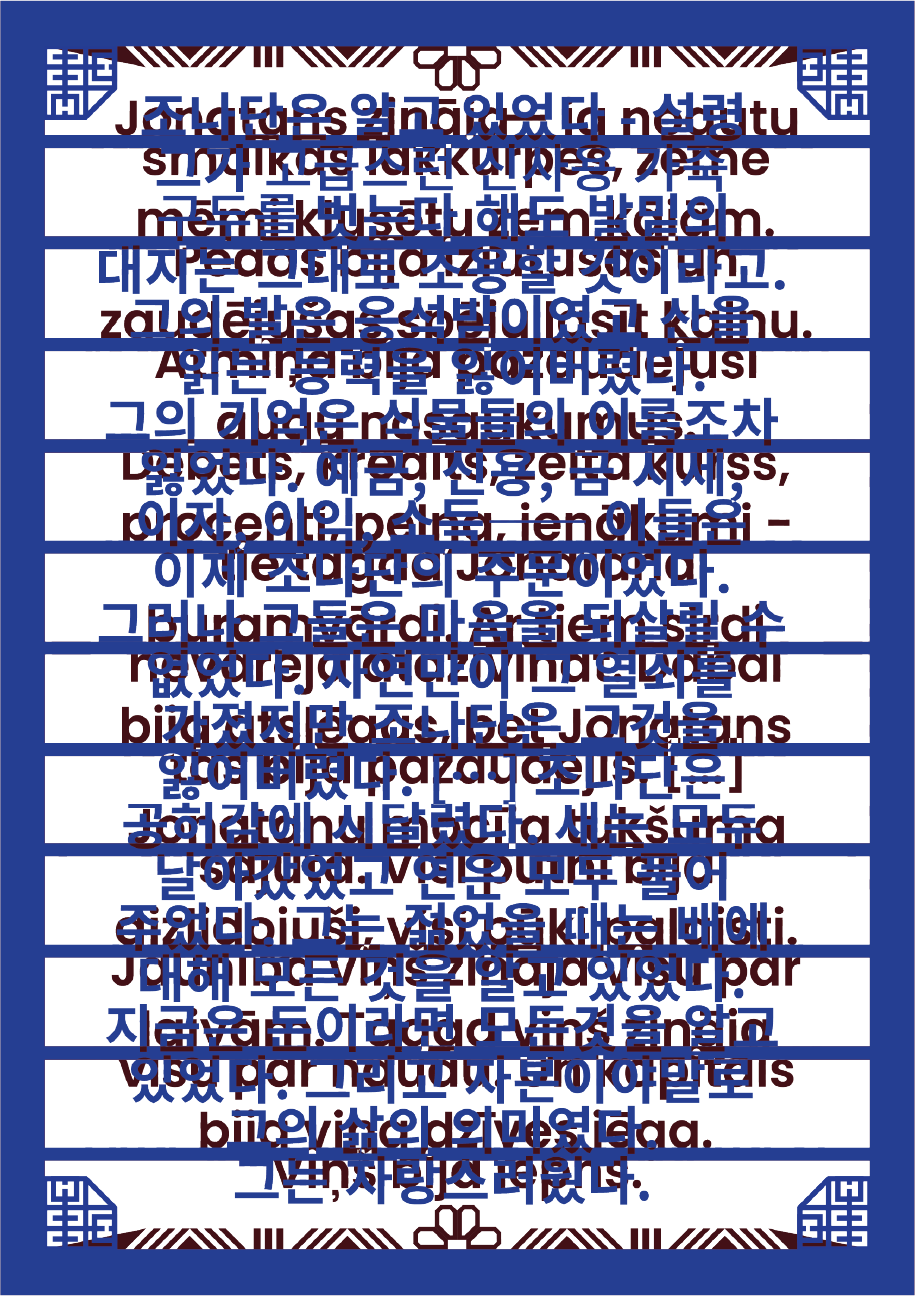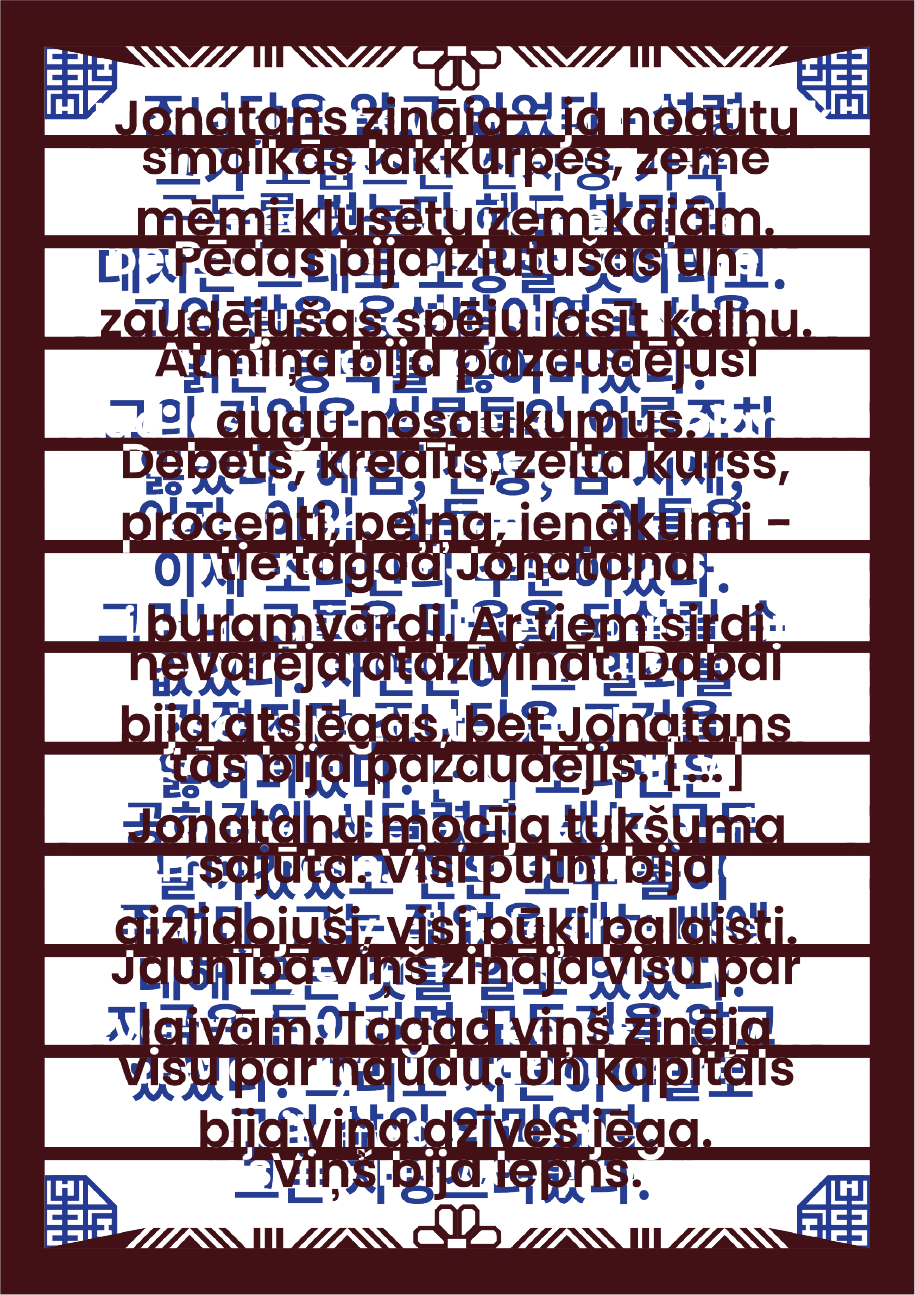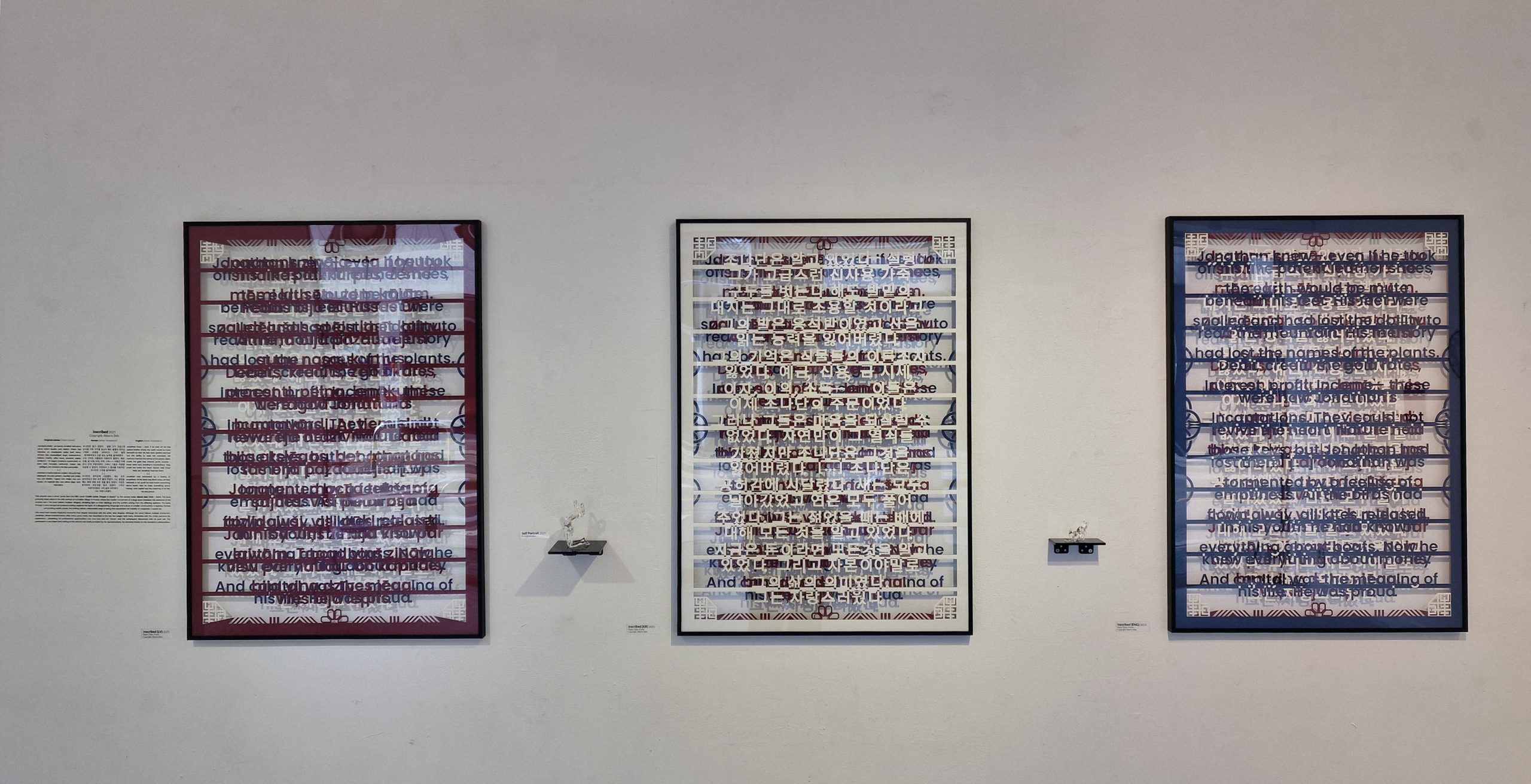
This artwork uses a direct quote from the 1987 novel “Cilvēki Laivās (People in Boats)” by the Latvian writer Alberts Bels (1938 – 2024). The book primarily takes place in the 19th century at a smaller village in Prussia, where the sudden movement of a large dune threatens the existence of the remote town. The book follows multiple villagers, shedding light on their ideology and the conflict arising from the differing opinions. The book, through a very tranquil yet profound writing, explores the topic of a disappearing language and culture of smaller communities. It explores themes surrounding wealth, power, the shifting values, unfavorable ways of being that exacerbate the inability to cooperate / coexist etc.
This novel had several impactful moments that deeply resonated with the artist, Alise Stopiņa. Although the novel follows multiple characters, Jonathan, whose transformation after many years away was described in the last few pages, held many similarities with the artists personal life experience – prioritizing his professional opportunities over true love and his ”home”, and the subsequent disconnect with his past self. His disconnect with nature in this part of the book, describing the loss of knowledge he once pertained, resembled the knowledge that the artist has forgotten or didn’t even attain by leaving her home country. The permission to use Albert Bel’s writing in this artwork was kindly provided by his representatives. My sincerest thanks for this wonderful collaboration!
Original Latvian (Direct Quote):
Jonatans zināja – ja noautu smalkās
lakkurpes, zeme mēmi klusētu zem
kājām. Pēdas bija izlutušas un zaudējušas spēju lasīt kalnu. Atmiņa
bija pazaudējusi augu nosaukumus.
Debets, kredīts, zelta kurss, procenti,
peļņa, ienākumi – tie tagad Jonatana
buramvārdi. Ar tiem sirdi nevarēja
atdzīvināt. Dabai bija atslēgas, bet
Jonatans tās bija pazaudējis.
[…]
Jonatanu mocīja tukšuma sajūta. Visi putni bija aizlidojuši, visi pūķi palaisti. Jaunībā viņš zināja visu par laivām. Tagad viņš zināja visu par naudu. Un kapitāls bija viņa dzīves jēga. Viņš bija lepn
Korean (Artists Translation):
조나단은 알고 있었다 – 설령 그가
고급스런 신사용 가죽 구두를 벗는다
해도 발밑의 대지는 그대로 조용할
것이라고. 그의 발은 응석받이였고
산을 읽는 능력을 잃어버렸다.
그의 기억은 식물들의 이름조차
잃었다. 예금, 신용, 금 시세, 이자,
이익, 소득―― 이들은 이제 조나
단의 주문이었다. 그러나 그들은
마음을 되살릴 수 없었다. 자연만이
그 열쇠를 가졌지만 조나단은 그것을
잃어버렸다.
[…]
조나단은 공허감에 시달렸다. 새는
모두 날아갔었고 연은 모두 풀어
주었다. 그는 젊었을 때는 배에 대해
모든 것을 알고 있었다. 지금은
돈이라면 모든것을 알고 있었다.
그리고 자본이야말로 그의 삶의
의미였다.
그는 자랑스러웠다.
English (Artists Translation):
Jonathan knew – even if he took off
his fine patent leather shoes, the
earth would be mute beneath his
feet. His feet were spoiled and had
lost the ability to read the mountain.
His memory had lost the names of
the plants. Debit, credit, the gold
rate, interest, profit, income – these
were now Jonathan’s incantations.
They could not revive the heart.
Nature held those keys, but
Jonathan had lost them.
[…]
Jonathan was tormented by a feeling of emptiness. All the birds had flown away, all kites released. In his youth he had known everything about boats. Now he knew everything about money. And capital was the meaning of his life. He was proud.